


Falkon Focus: Pricing on Amazon is driven by algorithms, competition, and seller behavior, not brand agreements. MAP still plays a role as a pricing signal, but real pricing stability comes from identifying unauthorized sellers, understanding how inventory enters the marketplace, and engaging with Amazon through policy-compliant actions. Gray Falkon helps brands move beyond static MAP rules and into continuous pricing visibility, seller oversight, and marketplace engagement built for how Amazon actually operates today.
Why MAP Looks Simple and Fails in Practice on Amazon
Minimum Advertised Price (MAP) policies are widely used by brands to protect pricing integrity, preserve margins, and maintain consistent brand positioning. On paper, MAP feels straightforward. Set a price floor, communicate it to sellers, and address violations when they occur. In traditional retail environments, this approach can be effective.
On Amazon, however, MAP operates in a very different context.
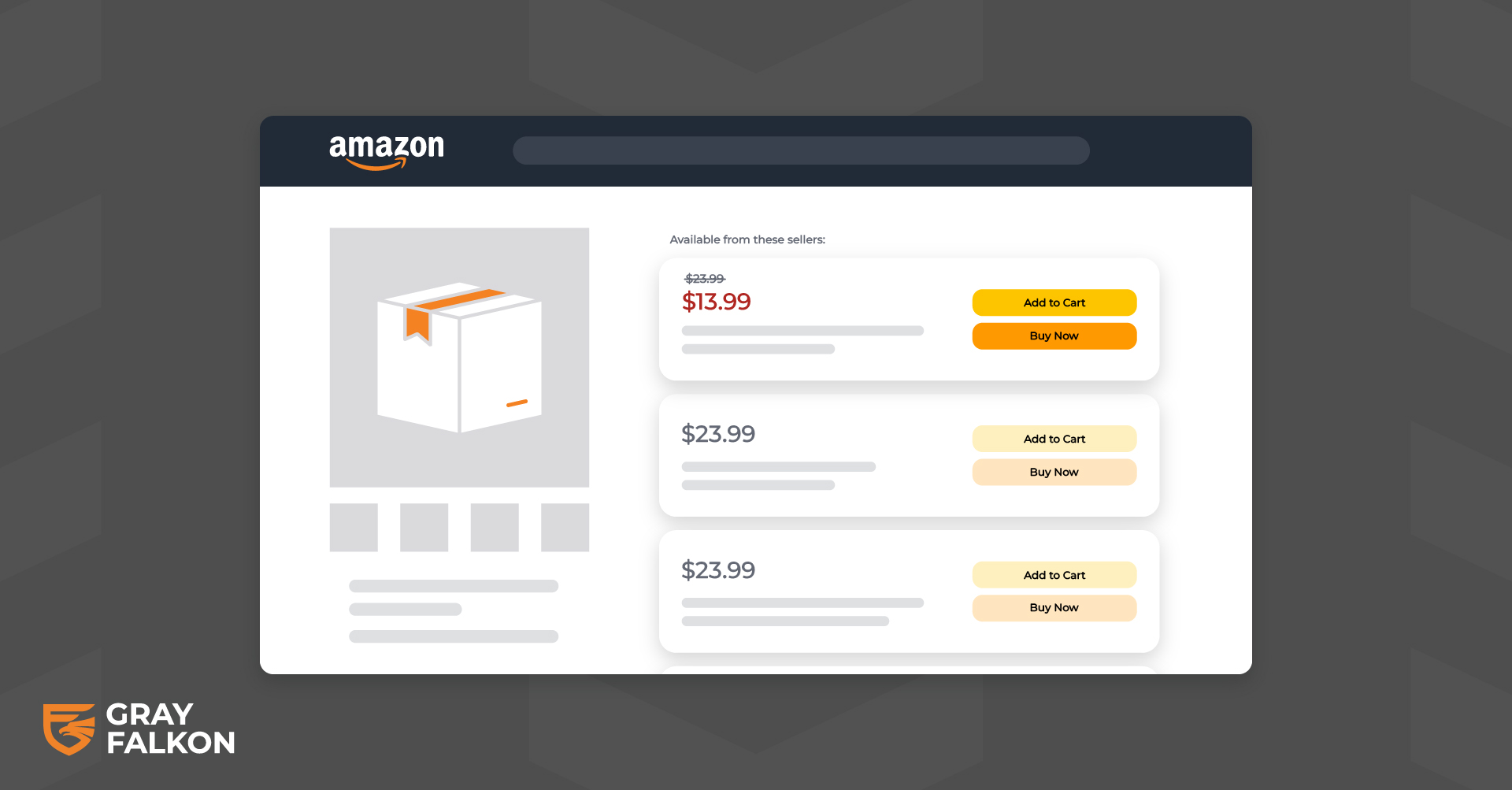
Amazon does not recognize or enforce brand MAP policies as part of its pricing framework. Instead, its systems prioritize competitive pricing, customer value, and seller performance signals. Multiple sellers can offer the same product under a single ASIN, pricing updates happen in real time, and visibility is often determined by who can offer the most competitive landed price at any given moment. In this environment, MAP violations are rarely isolated incidents. They are the outcome of broader marketplace dynamics.
As eCommerce evolves on Amazon, many are discovering that having a MAP policy is no longer enough. Unauthorized sellers, gray market inventory, Featured Offer (formerly Buy Box) competition, and automated repricing tools can quickly erode pricing discipline, even when policies are clearly defined and communicated.
It’s not about whether MAP policies are valuable. They are. It’s about how MAP actually behaves on Amazon, what an “Amazon MAP violation” really means in practice, and what brands can realistically control in a marketplace where pricing is driven by algorithms rather than agreements.
What Is an Amazon MAP Policy (and What It Is Not)
An Amazon MAP policy is not a policy enforced by Amazon. It is a pricing agreement established by a brand that sets the minimum advertised price at which its products may be marketed by sellers. While many brands assume MAP carries weight inside Amazon’s ecosystem, the reality is more nuanced.
On Amazon, MAP exists entirely outside the platform’s pricing enforcement mechanisms. Amazon does not recognize MAP agreements, monitor MAP compliance, or take action based solely on a brand’s pricing policy. Instead, Amazon’s systems are designed to promote competitive pricing that benefits the customer, regardless of a brand’s preferred price floor.
This distinction is critical. An Amazon MAP policy:
- Is a brand-level pricing guideline, not a marketplace rule
- Does not trigger enforcement by Amazon when violated
- Cannot be “reported” to Amazon as a standalone violation
At the same time, an Amazon MAP policy is not meaningless. It plays an important role in shaping how brands manage seller relationships, authorize resellers, and identify pricing behavior that falls outside approved distribution strategies.
Problems arise when MAP policies are treated as enforcement tools rather than reference frameworks. On Amazon, pricing is influenced by multiple factors operating simultaneously, including:
- Featured Offer (formerly Buy Box) competition
- Automated repricing tools
- Multiple sellers sharing a single ASIN
- Cross-border and gray market inventory
In this environment, MAP violations often appear as sudden price drops or persistent undercutting, but those price changes are symptoms of broader marketplace dynamics rather than isolated policy breaches.
Understanding what an Amazon MAP policy is, and what it is not, sets the foundation for realistic expectations. MAP can inform strategy, guide seller oversight, and signal when pricing instability emerges. What it cannot do is enforce itself inside Amazon’s pricing algorithms.
How Pricing Really Works on Amazon
To understand why MAP breaks down on Amazon, it helps to understand how pricing visibility actually works on the platform. Amazon’s pricing system is not designed around brand agreements or advertised price floors. It is designed to surface the most competitive offer for the customer at any given moment.
At the center of this system is the Featured Offer (Buy Box). Buy Box eligibility is influenced by several factors, including landed price, fulfillment method, delivery speed, seller performance, and availability. While price is not the only variable, it is often the most decisive one, especially when multiple sellers offer the same product under a single ASIN.
This structure creates constant downward pressure on pricing. Sellers frequently rely on automated repricing tools that adjust prices in real time to remain competitive. When one seller drops price, whether intentionally or due to gray market sourcing, others often follow to avoid losing visibility. MAP policies do not factor into this process, because Amazon’s algorithms do not account for brand pricing agreements.
Multiple sellers sharing the same listing further complicate MAP pricing. Even when a brand authorizes certain sellers, unauthorized sellers can attach themselves to the same ASIN and compete directly. From the platform’s perspective, these offers are interchangeable as long as they meet Amazon’s customer experience requirements.
As a result, pricing behavior on Amazon is driven by competitive dynamics rather than contractual ones. Price erosion rarely happens because sellers are intentionally violating MAP. More often, it occurs because the system rewards the lowest viable offer, and sellers respond accordingly.
This is why brands often see pricing instability appear suddenly and spread quickly. Once competitive pricing pressure takes hold, MAP becomes difficult to maintain without visibility into seller behavior and inventory sources.
What Does an Amazon MAP Violation Actually Look Like?
An “Amazon MAP violation” is not a platform violation. It is a brand-defined pricing issue that becomes visible through marketplace behavior. This distinction is critical, because it shapes how brands should respond when pricing breaks down.
In practice, a MAP violation on Amazon usually appears as unexpected or persistent price erosion on a product listing. The price drops below the brand’s advertised floor, often without warning, and may fluctuate rapidly as sellers compete for visibility. From the brand’s perspective, this looks like noncompliance. From the marketplace’s perspective, it is simply competitive pricing at work. Some common scenarios that trigger perceived MAP violations include:
- Unauthorized sellers undercutting prices using gray market or diverted inventory
- Authorized sellers reacting defensively to avoid losing the Featured Offer (Buy Box)
- Automated repricing tools adjusting prices in real-time based on competitor behavior
- Cross-border inventory entering the market at a lower cost and resetting price expectations
In many cases, no single seller is intentionally breaking MAP. Instead, the violation emerges from a chain reaction. One seller drops price, others follow, and the listing settles at a new, lower equilibrium that reflects marketplace competition rather than brand intent.
This is why Amazon MAP violations are often symptoms, not root causes. The visible price drop is the outcome of deeper issues, such as unauthorized selling and inventory leakage. Treating the price itself as the problem often leads to short-term fixes that fail to hold.
Unauthorized Sellers and the Breakdown of MAP on Amazon
Unauthorized sellers are one of the most common drivers of MAP instability on Amazon. While MAP policies may be clearly communicated to authorized partners, they do not apply to sellers operating outside a brand’s approved distribution network. When those sellers enter the marketplace, pricing discipline often breaks down quickly.
Many unauthorized sellers source inventory through gray market channels such as excess stock, holiday returns, international distributors, retail arbitrage, or liquidation. Because these products are acquired at lower cost, sellers can profit while pricing below MAP. Once a lower-priced offer appears on a listing, it introduces immediate pressure on other sellers competing for visibility.
This pressure often cascades. Authorized sellers who were previously compliant may begin adjusting prices to retain the Featured Offer (Buy Box). Automated repricing tools amplify the effect by responding instantly to the lowest available offer, regardless of whether that seller aligns with the brand’s pricing strategy.
MAP breakdowns tend to accelerate during periods of heightened activity, including promotions, inventory shortages, and seasonal sales events. As demand increases, so does competition, and unauthorized sellers are more likely to surface inventory that disrupts established pricing floors.
Over time, repeated price erosion creates lasting consequences. Customers begin to associate lower prices with the product’s true value. Authorized sellers lose confidence in the brand’s ability to maintain consistency. Internal teams spend increasing time responding to pricing issues rather than addressing root causes.
This is why MAP rarely fails in isolation on Amazon. It fails when unauthorized sellers gain sustained access to listings and introduce pricing pressure that the platform is designed to reward. Without visibility into who is selling and how inventory is sourced, brands are left reacting to symptoms rather than addressing the structural drivers of MAP erosion.
Why Amazon MAP Enforcement Is Structurally Limited
One of the most common misconceptions brands have is that Amazon can be asked to “enforce” MAP pricing. In reality, Amazon’s systems are not designed to act on brand pricing policies, even when those policies are clearly documented and consistently applied outside the marketplace.
MAP is a private agreement between a brand and its authorized sellers. Amazon is not a party to that agreement, and its policies do not recognize minimum advertised pricing as a standalone violation. As a result, reporting a seller to Amazon solely for pricing below MAP does not trigger action.
From Amazon’s perspective, enforcement decisions are based on marketplace rules, not brand preferences. The platform evaluates whether sellers meet customer experience standards, comply with program policies, and offer competitive value. Pricing that falls below a brand’s MAP threshold is not inherently problematic unless it coincides with a separate program policy issue.
This creates a structural gap. Brands may clearly identify MAP violations internally, but Amazon will only intervene when pricing behavior intersects with program policy violations, such as:
- Unauthorized selling tied to Brand Registry protections
- Misrepresentation of product condition or authenticity
- Amazon Marketplace Fair Pricing Policy
- Listing or detail page violations
- Policy breaches related to fulfillment, customer experience, or seller conduct
Because of this, MAP enforcement on Amazon is indirect by nature. Brands cannot rely on the platform to uphold price floors. Instead, they must focus on the behaviors and conditions that lead to pricing erosion, particularly unauthorized sellers and gray market inventory.
This distinction sets the stage for a more practical question: if Amazon does not enforce MAP, what can brands actually control?
What Brands Can Control on Amazon
While Amazon does not enforce MAP policies, brands are not powerless when pricing instability appears. The key is shifting from a mindset of enforcement to one of control and visibility. On Amazon, brands that maintain pricing stability do so by actively managing the conditions that lead to MAP erosion, rather than reacting to price drops alone.
- Seller Authorization: One of the most important levers brands control is who is allowed to sell. Seller authorization strategies, reseller agreements, and consistent oversight help define the boundaries of a brand’s distribution network. While these controls exist outside Amazon’s systems, they provide a framework for identifying sellers whose pricing behavior falls outside approved channels.
- Identifying Violations: Brands can also control how pricing behavior is monitored over time. Instead of focusing on single price violations, effective MAP strategies track patterns such as repeated undercutting, sudden seller influxes, or pricing volatility across multiple ASINs. These patterns often reveal gray market sourcing or unauthorized seller activity that drives long-term erosion.
- Monitoring Behavior: Visibility into seller behavior is another critical factor. Understanding which sellers consistently disrupt pricing, how often they reappear, and whether they operate across multiple listings allows brands to move from reactive responses to informed decision-making. This visibility is especially important in environments where automated repricing tools amplify even small price changes.
- Action Plan: Brands can control how pricing issues are addressed internally. Aligning eCommerce, legal, and channel management teams around a shared understanding of MAP, unauthorized selling, and marketplace dynamics reduces friction and improves response consistency. When MAP is treated as an operational signal rather than a rule to enforce, teams are better equipped to act strategically.
On Amazon, MAP stability is achieved through discipline, visibility, and consistency. Brands that focus on these controllable elements are better positioned to manage pricing expectations, protect authorized partners, and reduce the downstream impact of unauthorized sellers.
How Gray Falkon Helps Stabilize MAP on Amazon
Maintaining MAP stability on Amazon requires continuous visibility into seller behavior and pricing dynamics. Because MAP policies are not enforced by the marketplace itself, brands need a system that helps identify what is driving price erosion and respond in a way that aligns with Amazon’s policies.
Gray Falkon has solutions designed to support MAP stability by helping brands monitor unauthorized seller activity, engage the marketplace when policy violations occur, and understand how unauthorized sellers impact pricing over time.
AI-Powered Monitoring Across Marketplaces
Gray Falkon’s solution uses AI-powered technology to monitor listings across Amazon, Walmart, and other major marketplaces. Unlike other monitoring tools, we track all unauthorized sellers and listings, giving you full visibility into who’s disrupting your listings.
Automated, Marketplace-Compliant Engagement
When pricing instability overlaps with enforceable marketplace policies, Gray Falkon’s Full Deployment solution automates engagement with Amazon through structured, policy-aligned reporting. This process helps brands:
- Act quickly when unauthorized selling or listing violations are identified
- Maintain consistent documentation tied to marketplace requirements
- Reduce internal workload during periods of pricing volatility
Rather than reacting to every price dip, brands can focus engagement where marketplace action is possible.
Falkon Connect: AI-Powered Seller Engagement
In many cases, stabilizing MAP requires understanding how sellers are sourcing inventory. Falkon Connect enables brands to engage directly with sellers at scale, gathering sourcing information and encouraging voluntary compliance with brand distribution standards. This seller engagement helps:
- Identify gray market supply paths
- Reduce repeat pricing disruptions
- Resolve issues before they cascade across multiple listings
Ask Gr[AI] Falkon: Policy Intelligence for a Policy-Driven Platform
Amazon’s policies determine when action can be taken, not MAP agreements. Ask Gr[AI] Falkon provides real-time clarity by translating Amazon’s evolving policies into actionable guidance. Brands can quickly understand:
- Which policy violations intersect with unauthorized seller behavior
- What documentation supports marketplace engagement
- How to align actions with current Amazon rules
Marketplace Brand Protection Portal
Full Deployment clients gain access to Gray Falkon’s Marketplace Brand Protection Portal, a centralized dashboard suite that transforms pricing and seller data into strategic insight. Key dashboards include:
- Overview Dashboard: Visibility into seller activity across marketplaces
- Products Dashboard: Identification of which products are most affected, and how many unauthorized sellers have targeted them.
- Sellers Dashboard: Tracking of repeat offenders.
Together, these tools help brands move from reactive MAP enforcement attempts to proactive brand protection strategies that work within Amazon’s ecosystem.
MAP Still Matters, but Control Comes from Visibility and Action
Amazon MAP enforcement in 2026 looks very different from how many brands expect it to work. While MAP policies remain an important internal framework for managing authorized sellers and distribution strategy, they do not function as an enforcement mechanism inside Amazon’s marketplace. Pricing on Amazon is shaped by algorithms, competition, and seller compliance with marketplace program policies, not by brand agreements.
The real risk is not having a MAP policy. It is assuming that MAP alone can stabilize pricing in an environment where unauthorized sellers, gray market inventory, and automated repricing tools move faster than manual oversight. On Amazon, pricing instability is rarely the result of a single violation. It is usually the outcome of unmanaged seller access and fragmented inventory flowing into the marketplace.
Brands that succeed in maintaining pricing integrity approach MAP as a signal, not a solution. Sudden price drops, persistent undercutting, and Featured Offer volatility are indicators that unauthorized sellers are active and that distribution controls may be breaking down. Addressing those issues requires visibility across listings, sellers, and behavior patterns, paired with consistent marketplace-compliant engagement.
Schedule a demo today and learn how Gray Falkon can help protect your brand on Amazon and other major marketplaces.